
Introduction to ETEEAP
The Expanded Tertiary Education Equivalency and Accreditation Program (ETEEAP) is a special program of the Philippine government that allows qualified working Filipinos to earn a college degree based on their work experience, skills, and knowledge acquired outside the traditional classroom.
This program is especially helpful for people who were unable to finish college due to financial difficulties, family responsibilities, overseas work, or other life circumstances.
The Purpose of ETEEAP
ETEEAP was created to recognize that learning does not only happen inside a classroom.
Many Filipinos have gained valuable knowledge and skills through:
- Employment and professional work
- Business ownership
- Technical training
- Seminars and workshops
- Community involvement
- Volunteer work
- Overseas employment
Instead of starting college from the beginning, qualified applicants may receive academic credits for these experiences.
Brief History of ETEEAP
ETEEAP was established through Executive Order No. 330 signed by former Philippine President Fidel V. Ramos on May 10, 1996. Later, it became part of Philippine law through Republic Act No. 12124, signed by Ferdinand Marcos Jr. in March 2025.
This law strengthened the government’s commitment to helping experienced workers earn recognized college degrees.
Who Can Apply for ETEEAP?
ETEEAP is intended for Filipinos who have accumulated significant work experience related to the degree they want to pursue.
Generally, applicants should:
- Be Filipino citizens
- Have completed secondary education or its equivalent
- Possess substantial work experience
- Have skills and knowledge related to the degree program
- Be able to provide supporting documents and proof of experience
The exact requirements may vary depending on the school and degree program.
Why ETEEAP is Important
Many experienced workers perform duties similar to college graduates but lack the diploma required for promotion or career advancement.
ETEEAP helps by:
- Recognizing prior learning and work experience
- Opening opportunities for promotion
- Improving employment prospects
- Increasing professional credibility
- Providing a faster route to earning a degree
For many workers, it is a chance to achieve educational goals without leaving their jobs.
How ETEEAP Works
Instead of attending all regular college classes, applicants undergo an assessment process.
Schools evaluate:
- Work experience
- Professional achievements
- Skills and competencies
- Previous education
- Training certificates
- Portfolios and supporting documents
Based on the evaluation, the school determines how much academic credit can be awarded and what additional requirements must be completed before graduation.
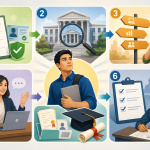
Three Simple Steps to Earn a Degree Through ETEEAP
Step 1: Check Your Qualifications
Review your educational background and work experience.
Ask yourself:
- Do I have relevant work experience?
- Is my experience related to the degree I want?
- Can I provide proof of my experience?
Step 2: Choose an ETEEAP School
Select a college or university authorized to offer ETEEAP.
Different schools may offer different degree programs and procedures.
Step 3: Submit Requirements and Undergo Evaluation
Prepare your documents and submit them to the school.
The school will evaluate your credentials and guide you through the remaining requirements.
Common Documents Required
Although requirements vary by institution, applicants are commonly asked to submit:
- Comprehensive Resume or Curriculum Vitae (CV)
- Certificates of Employment (COE)
- Government-issued ID
- Birth Certificate
- High School Credentials
- College Records (if applicable)
- Training Certificates
- Awards and Recognitions
- Portfolio of Work Accomplishments
Schools may request additional documents depending on the degree program.
Learning Methods Used by ETEEAP Schools
Schools may use different learning systems, including:
Face-to-Face Learning
Students attend classes on campus.
Online Learning
Classes and activities are conducted through the internet.
Modular Learning
Students complete learning modules independently.
Hybrid Learning
A combination of online and face-to-face learning.
The learning system depends on the school’s policies and available programs.
Examples of People Who Can Benefit from ETEEAP
ETEEAP may be suitable for:
- Overseas Filipino Workers (OFWs)
- Supervisors and Managers
- Office Staff
- Teachers and Teaching Assistants
- Business Owners
- Factory Workers
- Caregivers
- Domestic Helpers
- Security Personnel
- Government Employees
- Technical Workers
What matters most is that the applicant has relevant work experience related to the degree program.
Important Things to Remember
Before applying:
- Organize your employment records.
- Gather certificates and supporting documents.
- Prepare a detailed resume.
- Be ready for interviews and assessments.
- Choose a degree aligned with your work experience.
The stronger your documentation, the easier it will be for evaluators to assess your qualifications.
Final Thoughts
ETEEAP provides a valuable opportunity for experienced Filipinos to transform years of work experience into a recognized college degree. Instead of starting from scratch, qualified applicants can receive credit for the knowledge and skills they have already acquired through real-world work.
For many working professionals, ETEEAP serves as a practical pathway toward career advancement, professional recognition, and personal achievement.